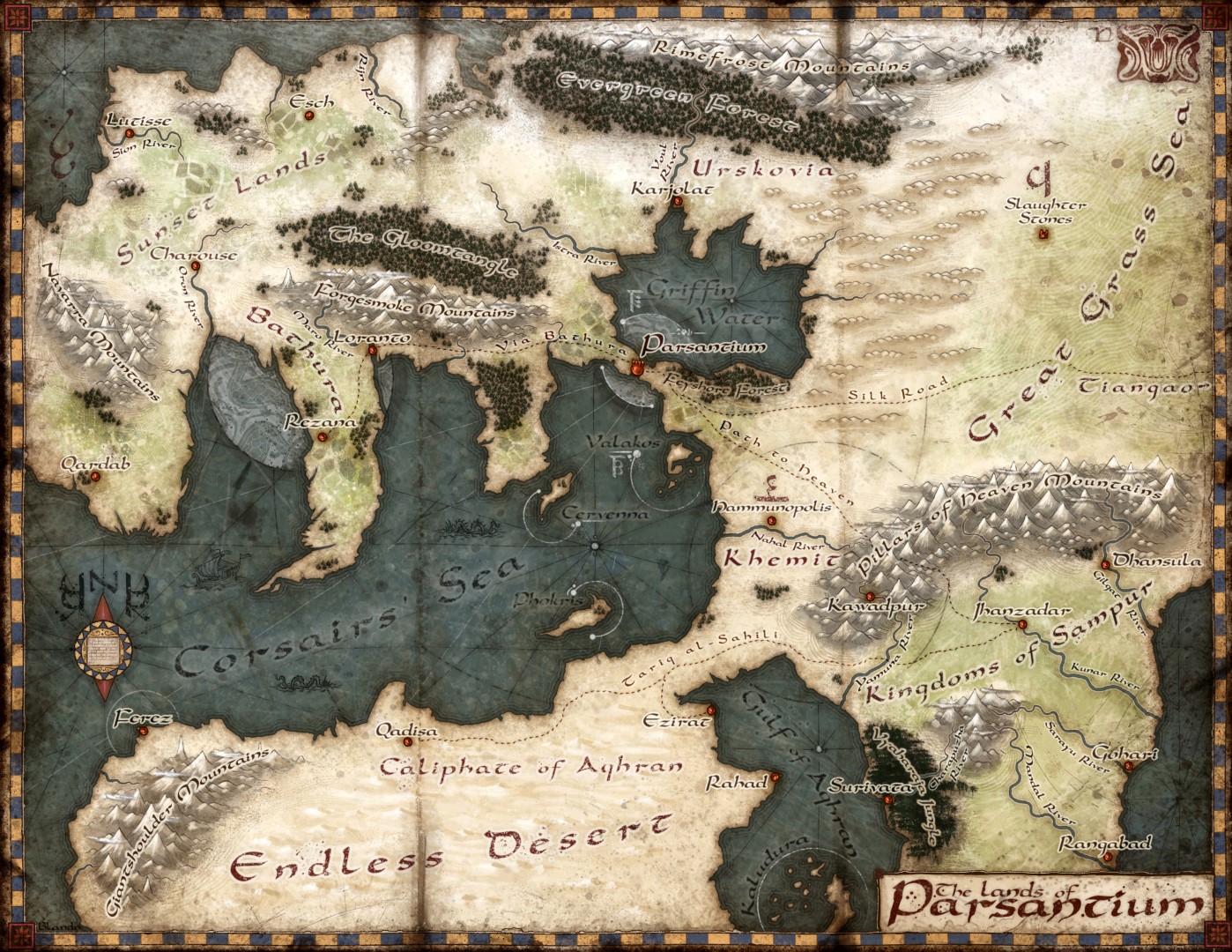
With the Labyrinth Worldbook coming soon from Kobold Press, I thought I would publish a few posts and share some more information about my campaign setting, the Lands of Parsantium, one of the core worlds featured in the book, starting with the trade routes that make Parsantium the “City at the Crossroads”.
Parsantium is above all else a trading city, where merchants come from all over the known world to sell their goods for the highest price possible, and to buy whatever is in demand back home. As well as exporting goods that have arrived in the city from elsewhere, Parsantium produces a number of sought-after commodities itself, including beer, wine, olives, fine clothing and metalwork, weapons and armour, jewellery, religious icons and rare woods. The purple dye made in the city from local shellfish is also much in demand by wealthy nobles overseas, but its export is restricted since purple should only be worn by the Basileus and his most important vassals.
The principal trade routes heading into and out of Parsantium by land are as follows:
The Silk Road heads southeast from Parsatium’s Camel Gate, then east along the southern edge of the Feyshore Forest and the Griffin Water, before crossing the vast Great Grass Sea to reach the distant lands of Tiangao. Silk, tea, jade, porcelain, lacquerware, brocade, fine art objects and swords, as well as white lotus dust (an addictive hallucinogenic drug) are the chief imports into Parsantium. Merchants and others travelling the Silk Road are at risk of attack from the savage gnolls and striped centaurs that roam the Great Grass Sea.
The Path to Heaven also leaves by the Camel Gate, but continues southeast through thorny wastes and badlands before crossing the Pillars of Heaven Mountains by means of a series of treacherous high passes, only accessible for half the year. The road then continues down the mountains into the six Kingdoms of Sampur. Rare spices and herbs, ambergris, tea, sandalwood and ebony, turquoise, lapis lazuli, rubies, ivory, pearls and exotic animals are the goods most commonly brought into Parsantium by Sampuran merchants.
The Via Bathura leaves Parsantium by the Victory Gate, heading northwest and then west into the Sunset Lands – the former territory of the Bathuran Empire – known as Erebu, the Land of Darkness, to the Aqhrani. The road winds its way through dark forests, rolling hills and high mountains, passing through small baronies and independent city states, many still bearing the trappings of their long-gone imperial masters, as well as wilderness roamed by fierce tribes of humanoids and fell beasts. Eventually, the Via Bathura reaches the Most Serene City of Loranto, a powerful city state with a navy to match, before finally coming to a stop in Rezana, where the Bathuran Empire began 1,500 years ago. Iron, gold and silver, wine, timber, pottery and perfumes are most commonly imported into Parsantium from the western lands.
By sea, goods enter and leave the city by three main routes:
Sailing south from the city, and hugging the coastline, a merchant ship will pass the fallen desert kingdom of Khemit. If her captain can steer clear of the pirates that prey on shipping in the Corsairs’ Sea, she will eventually arrive safely in the Caliphate of Aqhran. Here, sandships stand ready to transport goods onward to the desert capital of Qadisa. Aqhrani merchants bring incense, perfumes, spices, clockwork devices, brassware, exotic birds, rare animal skins, fine rugs and carpets into Parsantium. Many stop off en route at the island of Phokris to trade with its minotaur inhabitants.
The western sea route from Parsantium leads past the island of Cervenna and the flying headquarters of the Platinum Knights of Themicia to the wealthy city of Loranto. Merchants taking this route need to be wary of pirates and also the Crusading Brothers of the Sword, a knightly order that has fallen on hard times and has taken to preying on shipping heading to and from Parsantium.
The third route heads northeast up the Dolphin Strait and then north to the far side of the Griffin Water and the port town of Karjolat. Here, cargo is loaded onto barges for the slow return trip upriver to the frozen tundra of Urskovia. Barges heading in the reverse direction transport furs, wine, cheeses, wool, tallow, whalebone, art objects and diamonds bound for Parsantium.
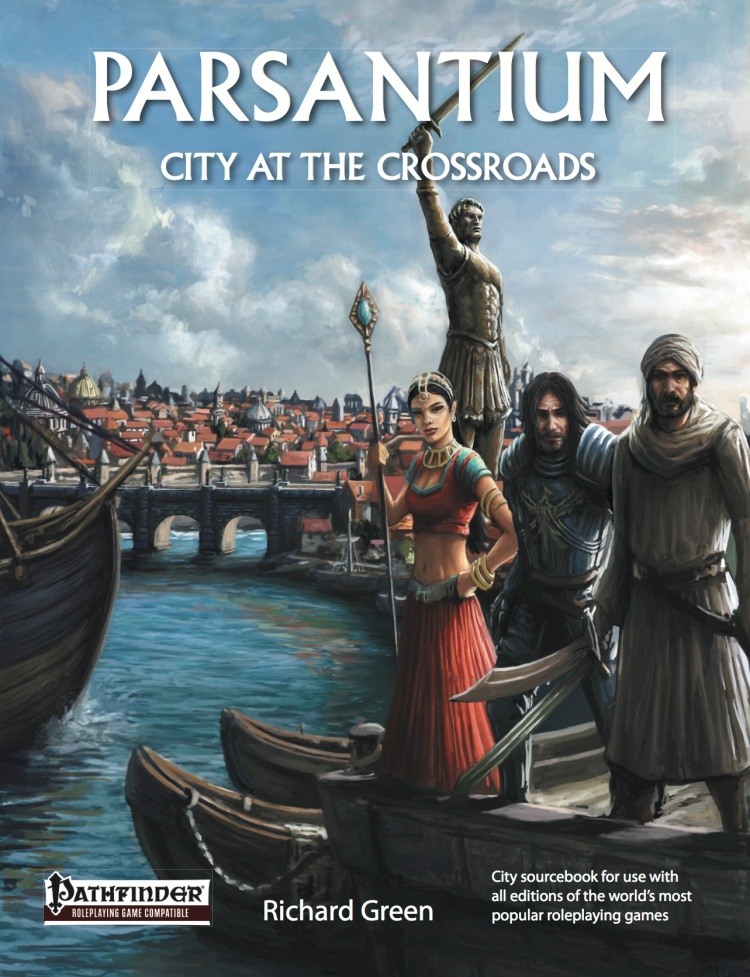
You can download a free preview of Parsantium: City at the Crossroads to find out more about the city or, better still, buy Parsantium from Drivethrurpg.
If you’ve enjoyed reading these posts, please do join my mailing list. There’s a sign up form below and subscribers receive a free Parsantium supplement.
Lands of Parsantium map by Jared Blando
Discover more from Richard Green | Game Designer
Subscribe to get the latest posts sent to your email.
 Richard Green | Game Designer